Landscaping, Plant Installation
Free Consultation
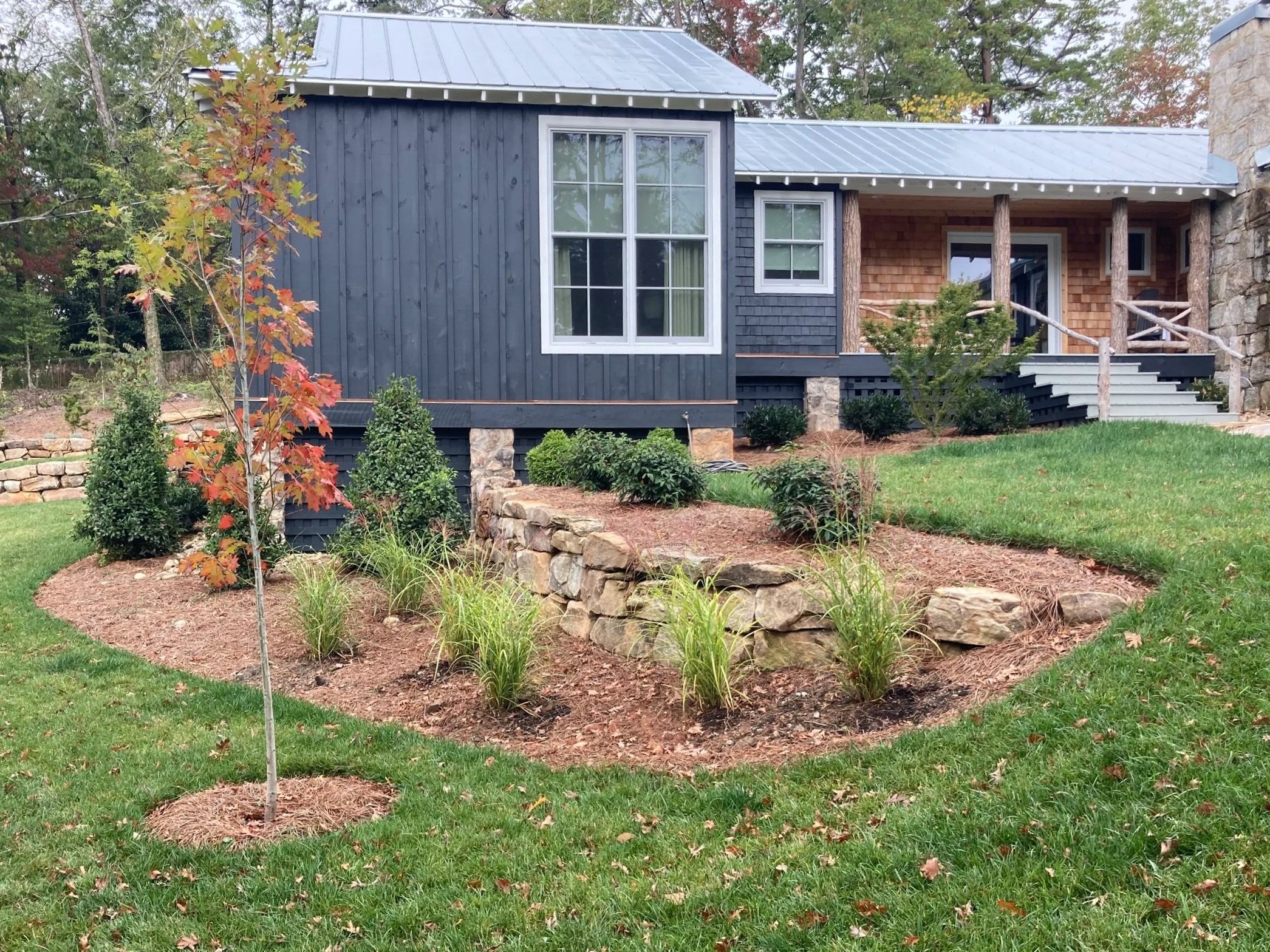
Plant selection and proper installation set the foundation for a healthy, attractive landscape. We start by assessing site conditions—sun exposure, soil type, drainage, and mature plant size—to choose species that will thrive with minimal long-term maintenance. Installation includes soil preparation (tilling, amending with compost or appropriate additives), correct planting depth to avoid root crown burial, and thorough backfilling with native soil mixed as needed to improve structure. Staking is used only when necessary to prevent root movement; excessive staking is avoided to encourage strong trunk development. Mulch is applied in a 2–3 inch layer, kept away from the trunk or stem to reduce disease and pest pressure. Newly installed plants are irrigated deeply at the time of planting and given a watering schedule that promotes deep root growth rather than surface wetting.
Hardscaping
Free Consultation
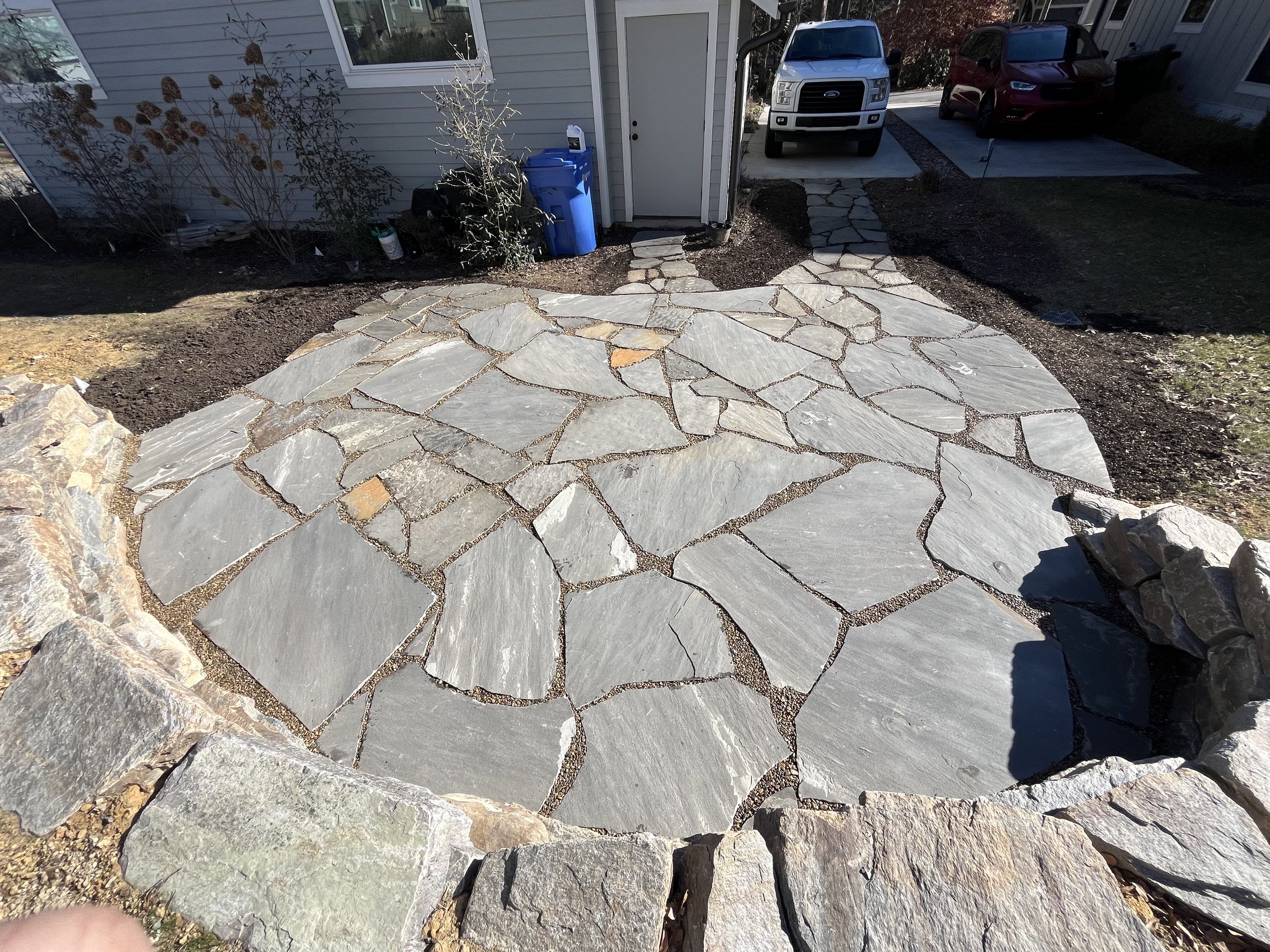
Hardscaping enhances functionality and visual structure in a landscape—patios, walkways, retaining walls, steps, and edging. Proper planning considers site grading, drainage, and integration with softscape elements. Durable installations begin with a solid base: appropriate geotextile fabric, compacted aggregate base, and edge restraints for pavers; proper footings and drainage behind retaining walls; and frost-depth considerations in colder climates. Material selection (natural stone, concrete pavers, poured concrete, timber, or composite products) should balance aesthetics, budget, and maintenance needs. Hardscapes should direct water away from structures and toward appropriate drainage or planting areas. Combining hardscape with planting beds and mulched planting pockets softens edges and creates cohesive outdoor rooms.
Free Consultation
Leaf removal:
Why it matters: Leaves left on lawns and beds block sunlight, trap moisture, promote disease and pests, and create uneven growth. Removing them helps turf breathe and prevents mold and thatch buildup. Collect leaves from beds before mulching to ensure the mulch adheres directly to soil and roots.
Timing and frequency: Aim for at least one full cleanup after most leaves have fallen. In heavy‑leaf years, schedule multiple passes to prevent smothering and to reduce cleanups required in spring.
Mulching:
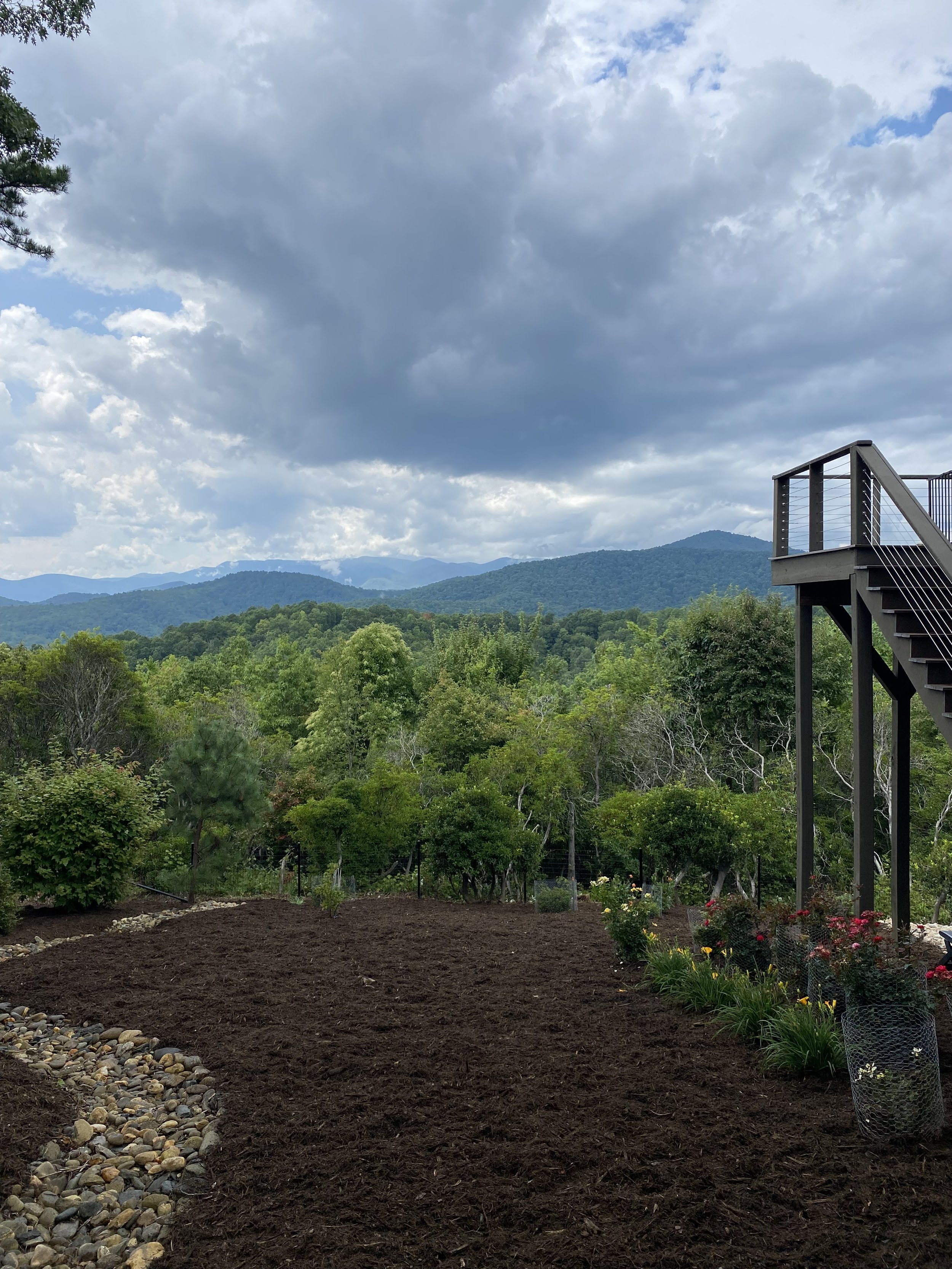
Mulch moderates soil temperature, conserves moisture, suppresses weeds, reduces erosion, and improves soil structure as it decomposes.
Seasonal Maintence
Lawn Care; Mowing, Aeration, Overseeding, and Weed Control
Free Consultation
Weekly or bi-weekly mowing in the Brevard, NC Area
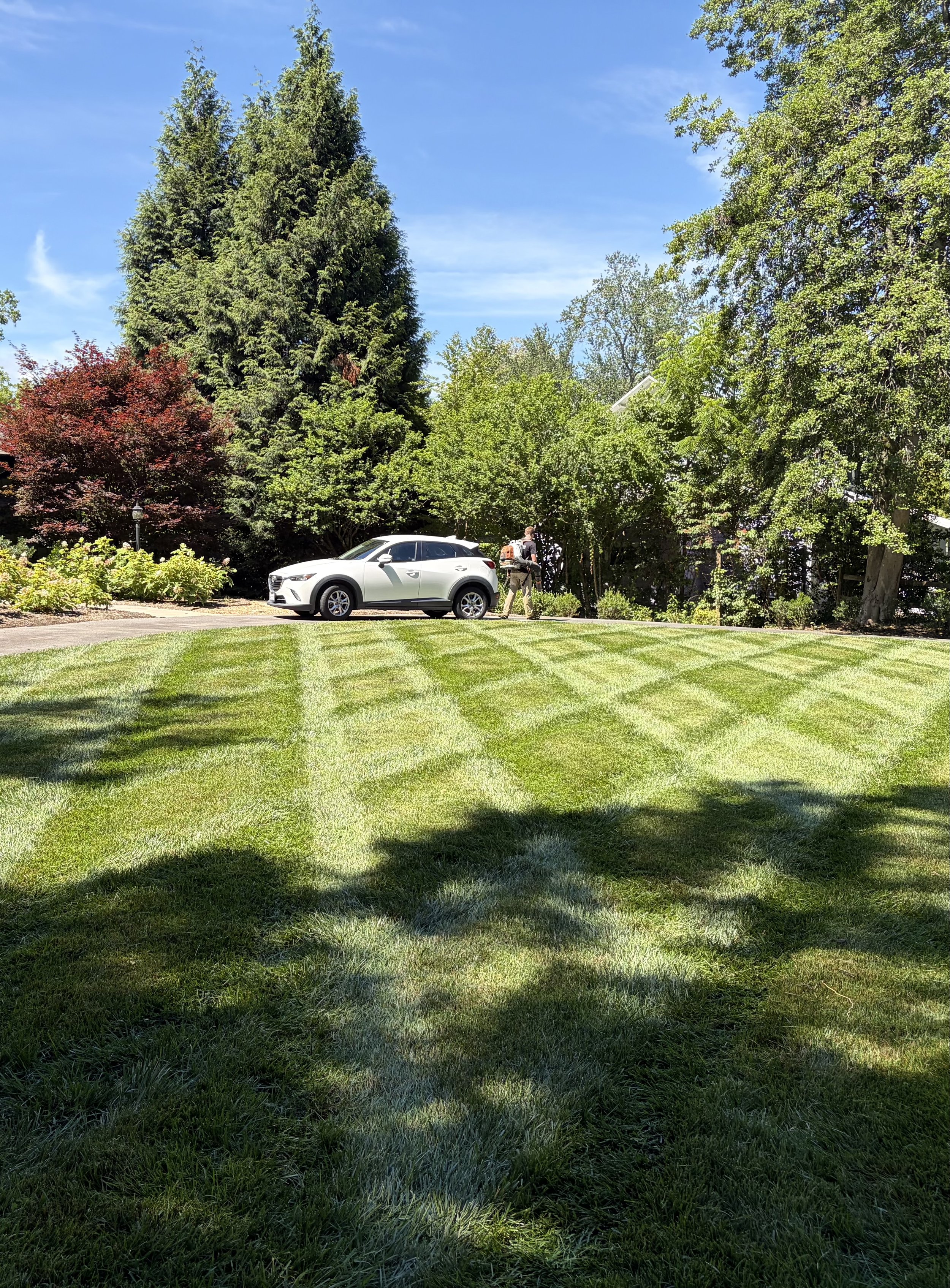
Precision mowing: Our team uses commercial-grade equipment and proven techniques to deliver a consistent, clean cut every time. We adjust blade height and cutting patterns for the specific grass type and season to promote healthier turf and an even appearance.
Reliable scheduling: We arrive on time and follow a routine that keeps your lawn looking its best. Seasonal frequency is tailored to growth rates—weekly in peak season, adjusted during slow growth—to prevent scalping or overgrowth.
Attention to detail: Beyond the cut, we edge sidewalks and driveways, blow clippings from hard surfaces, and remove debris so your property looks finished and well-maintained.
Turf health focus: We don’t just cut grass; we support long-term lawn health. Proper mowing height, sharp blades, and correct intervals reduce stress on grass, minimize weed invasion, and improve color and density.
Safety and cleanup: Our crew follows safety protocols, uses well-maintained machinery, and performs thorough cleanup after each visit so you don’t have to worry about trimmings or damage.
Aeration and Overseeding
Core aeration relieves soil compaction, improves oxygen flow to roots, enhances water infiltration, and increases the effectiveness of fertilizers. For lawns, we use a hollow-tine core aerator that removes soil plugs approximately 2–3 inches deep and spaced to provide adequate coverage. Best timing depends on grass type: cool-season grasses respond best to fall aeration, while warm-season lawns benefit from late spring to early summer aeration. After aeration, cores can be left to break down naturally or raked out depending on client preference. Combining aeration with overseeding and topdressing maximizes seed-to-soil contact and speeds recovery.
Overseeding restores lawn density, introduces more resilient grass varieties, and helps crowd out weeds. Preparation includes mowing slightly lower than normal and dethatching if needed to reduce barriers to seed-soil contact. For best results, overseed right after aeration so seed can fall into the holes created by the core plugs. Choose seed blends tailored to existing grass type and site conditions (shade tolerance, foot traffic). Lightly rake to ensure good contact, apply a thin layer of compost or starter topdress, and keep the area consistently moist until seedlings establish. Timing: fall is ideal for cool-season lawns; late spring to early summer is better for warm-season varieties.
Weed Control
An integrated approach yields the best weed control: cultural practices, mechanical removal, and targeted chemical use when necessary. Maintaining a dense, healthy lawn through proper mowing, fertilization, irrigation, aeration, and overseeding is the first line of defense. For existing weeds, hand-pulling or spot-treatment with selective herbicides is preferred to avoid harming desirable plants. Pre-emergent herbicides prevent grassy and broadleaf weeds when applied at the correct time for your region and lawn type (commonly early spring and sometimes fall). Post-emergent selective herbicides address established weeds; non-selective herbicides are reserved for hardscape edges, driveways, or areas where no vegetation is desired. Always follow label instructions and safety precautions.
Request a Consultation
Please complete the inquiry form so that our team can assess your property, outline a plan, and start a collaborative partnership that optimizes the appearance and health of your outdoor spaces.